4.1 Tools and equipment
When you are purchasing your tools and equipment, always ensure that you are doing your research and only deal with reputable suppliers. Reading online reviews and carefully reading product descriptions will help to ensure that what you are buying does exactly what it says on the box! Let’s look at all of the tools and equipment you will need to do your role efficiently and safely.
Tweezers
After a few months of being a lash technician, using tweezers will be as easing as picking something up with your hands! There are a range of tweezers available to use, and each type has a different function. The differences between each type are mainly to do with the tip. The table below outlines each type of tweezer you will use and what they are best used for:
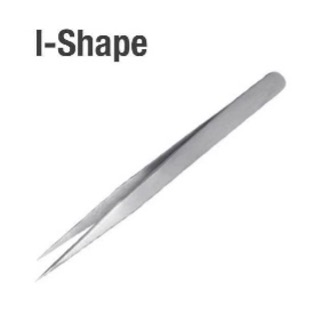
I-shape
Also known as ‘straight tweezers’, the I shape tweezers will be in every technician’s kit! They are excellent for isolation and classic lash application.
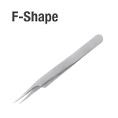
F-shape
The F shape tweezers are similar to the I tweezers, except they have a slight curve on the underside. This curve allows lash technicians to place them against the client’s brow without having them extend and rest on the lid of the eye. Because they are slightly thicker than A and X shapes, this also means they are excellent for isolations.
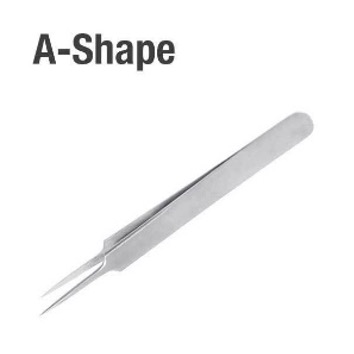
A-shape
With a finer point, the A-shape tweezers are excellent ‘pick up’ tweezers and are useful for picking up and bonding lashes using a classic lash application.
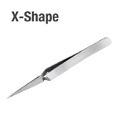
X-shape
The X shape tweezers have a fine straight tip which allows technicians to easily pick up and place individual extensions. They are most commonly used for classic lash application.
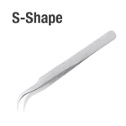
S-shape
The S shape tweezers have a distinct curvature at the tip, which allows technicians to pick up and grip multiple lash extensions at one time. This means they are suitable for volume lash application, and because there is a fine tip, you can also use them for isolation.
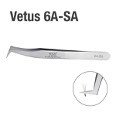
L-shape
Due to the L-shape of the tip, these tweezers are excellent tools when you make handmade volume fans. The angle of the point makes it very easy to pick up and attach the fans.
Round
Round tip lash tweezers are excellent for removing tapes or eye pads after the treatment. As the tip is round, you have less risk of injuring your client!
Depending on your supplier, these tweezers may also be categorised as curved, inverted, pointy, slanted, straight and isolating tweezers. Using the right tweezers for the right task will make your job so much easier! At a minimum, you should have tweezers specifically for:
- Isolations
- Classic lash applications
- Volume applications
- Removing tape and eye pads
In addition to variance in the point of tweezers, there is also a range of materials that tweezers are made from. Most professional tweezers are made from titanium or stainless steel. The reason they are made from these materials is that they are hard wearing and safe to use on clients skin. Depending on the grade of stainless steel, they may contain a small amount of nickel, which can cause reactions in clients’ with nickel allergies and other sensitivities. Do not be fooled by products marketed as ‘hypoallergenic’.
Key phrase | Hypoallergenic: means that a product is ‘unlikely’ to cause a reaction.
As the definition suggests, hypoallergenic means that a product is unlikely to cause a reaction, but that doesn’t mean they are allergy-proof! While stainless steel tools will be fine on most clients, if you are concerned about causing allergic reactions, then you should opt for titanium tools. If you are ordering your tools from overseas, particularly from countries where rigorous compliance with alloy materials is not mandated, you can also purchase nickel tests to detect the presence of nickel. You can order these tests online, and they are relatively inexpensive and will give you some peace of mind that your tools are made from the materials they are supposed to made from.
When selecting the perfect tweezers, you also need to consider the grip and weight for your particular needs. You will be spending hours using your tweezers, so comfort is going to be absolutely essential! The way we grip our tweezers is especially important in terms of our own safety. If you hold your tweezers incorrectly for long periods of time, you could end up injuring yourself and causing irreversible damage. To learn more about how to hold your tweezers, watch the following AED video:
As you saw in the video, the correct position of your hands is absolutely essential. Taking time to practice your grip and hand position is critical for ensuring that you can not only efficiently isolate and apply lashes but to prevent any serious injuries.
If you would like to learn more about tweezer holding techniques, watch the videos linked:
Palettes
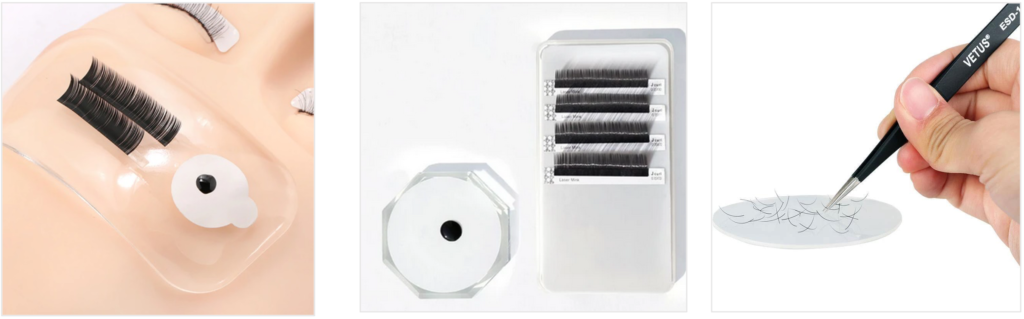
In your kit, you will have a range of palettes for different uses. You will need palettes for your adhesive and also palettes for your lashes. For adhesives, palettes are used so that you can dispense the amount of adhesive you need when you need it. There are a few options you can choose from, each with advantages and disadvantages:
Disposable glue well
As the name suggests, a disposable glue well is exactly that – a small container that is disposable. They come in all shapes and sizes, and some brand stock glue wells in the shape of a ring for ease of use. Disposable glue wells are relatively inexpensive and will save you time cleaning up, however they do create unnecessary waste.

Jade stone
Jade stones are a preferred glue palette as they extend the drying time of eyelash extension adhesive because they cool them down with their low-temperature base. They are reusable, very durable and non-porous, which means they are very hygienic. You should clean your jade stone after each use with glue remover. At the end of each day, you should soak the stone in acetone overnight.

Quartz stone
Just like jade stones, rose quartz also prevents the adhesive from drying quickly during the application process and is easily cleaned and durable. Rose quartz will stay cool regardless of the environment, whereas a jade stone will warm up in extreme temperatures. Rose quartz is a harder stone in comparison to jade, so it might last you a bit longer!

If you were performing services away from your usual workspace, disposables might be more convenient, but jade and quartz stones are much more sustainable and better for the environment!
For lash trays, you will generally have plastic options or silicone options. To combat wastage issues, many lash technician products are created using silicone. Silicone is a material that is easy to clean and can be air dried, which helps to prevent sanitation issues. Silicone pads are also excellent because you can comfortably rest them on your client! You can also get silicone eye pads, lash lifting pads, mascara brushes, micro brushes and much more!
Lash mirror
A lash mirror, or dental mirror, is a tool that you will use all the time as a lash technician! After you have placed eye pads, once you complete a segment and whenever you think you need to double-check symmetry, direction, and application – you will use a lash mirror. There are loads of varieties available, and most mirrors will come in stainless steel and titanium. In addition to the smaller dental mirror, you will also want to make sure you have a flattering full-face mirror so your clients can bathe in their beauty once their treatment is finished.
Air blower/fan
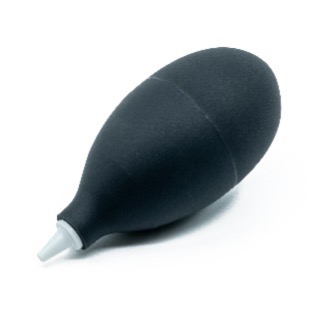
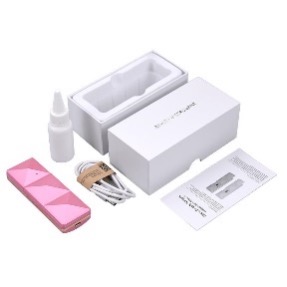
A lash fan is used to clear fumes from the adhesive before your clients open their eyes once you have finished your set. It is extremely important to do this so your client’s eyes don’t water, and it also helps with curing the glue. For normal sorts of fans, you should hold the fan over each eye for around 30 seconds before asking your client to slowly open their eyes. There are so many air blowers and fans on the market, and you may decide to spoil yourself and get a fancy fan! At the most basic of the options, you have a manual air blower (pictured left), then mid-range, there are drying fans with the top end products like the nano mister.
Air blower
Lash fan

Nano Mister
Mannequin head
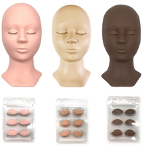
We will always be practising, trying out new styles and trying out new products, so having a mannequin head to practice on is essential – even for the most experienced lash technicians. There are loads of options on the market, and they range in price from $25 to $100. You have basic mannequin heads, and then there are mannequin heads that have removable eyelids! The type you choose will depend on your preference and budget. For practising placement, you will also be using makeup rounds, which we will cover later in this course.
Lash map guides and style sheets
In your kit, you should always have copies of lash maps and style sheets. You may decide to create and print your own, or there are heaps of options available online. Especially when you are starting out, you will want to have pre-populated lash maps that you can reference to help you create yours.