2.1 The history of nail enhancements
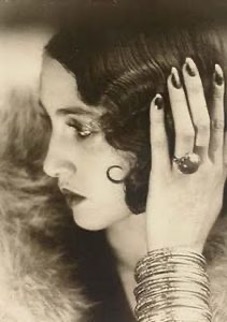
You only need to look at historic pieces of art or photos from the 1920s until now to see that nails have come a long way, and from the 2000s onward, the nail industry has boomed with advanced nail techniques replicating pieces of art in their own right! Every expert in their respective industry should have a firm understanding of where their craft originated and the progression of trends and styles through the ages. Let’s take a closer look.
Nail enhancement has been fashionable as far back as 3000 BC – but not everyone could have #nailsonpoint. Nail lacquer (or the very first name policy) was made predominantly from beeswax, eggs and flower petals was very common for high society in Ancient China. Fast forward a few thousand years, Royals and Nobels across the differing Chinese Empires would tend to have long nails as this symbolised wealth, given they did not have to use their hands for manual labour. Digging crops with long nails? I think not!
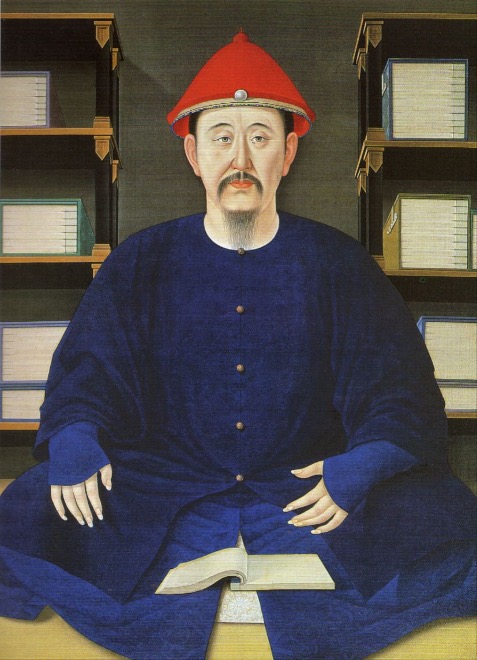
The image below shows a painting of Emperor Kangxi (Qing Dynasty) which clearly shows his long nails.
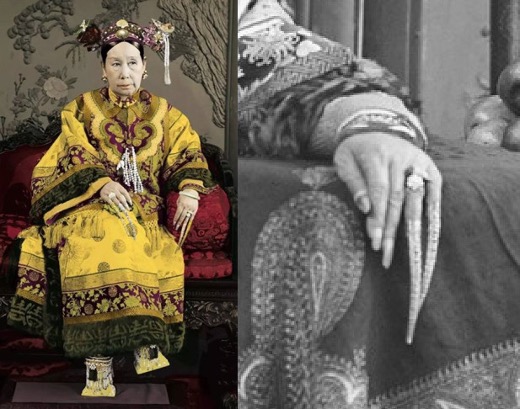
During the Qing Dynasty (1644 – 1912), fingernail guards were also popular and a sign of wealth and beauty. They were often made with precious metals such as gold and silver and were often embellished with jade stones, shells, and pearls. You might look at the nail guards and think they are completely impractical – and you would be right! People who wore these guards didn’t actually have to lift a finger; they had servants for that. The picture below shows Empress Dowager Cixi, who was an absolute #bosslady at the time as she essentially controlled the Chinese government in the late Qing dynasty for 47 years!
The Chinese were not the only ones who used nail enhancements as a sign of wealth. The Ancient Egyptians used to use henna to dye their nails. Henna is a small flowering shrub that has been used for centuries for many cultural applications. Back in Ancient Egypt, the upper class would have stained their nails to be very dark, and the lower class would have lighter nails. Archaeologists even discovered Egyptian mummies (dating to 5,000 BC) with gilded nails and henna-tinted fingertips!
The pedicure is said to have originated in Egypt as the Pharaohs were known to take extra special care of the feet and legs. There are carvings that show both men and women receiving beauty treatments, much like the ones we have today.
Cleopatra was a fashion icon of her time, and it wasn’t just her fierce eyeliner! Some sources claim that Cleopatra rocked a blood-red hue on her nails using henna to achieve the look. Ancient warriors in Egypt and originally in Babylonia would paint their nails green or black before the battle. It is also believed that the Ancient Babylonian’s crafted gold tools specifically for manicures and pedicures.
Manicures are also said to have begun 5,000 years ago in India, although most ancient cultures had their own version of manicures. Much like the Egyptians, henna was used in India to stain the nails. The French manicure that we know today (with the white tip) did not evolve until 1975, but we will learn more about that soon! Before we fast forward to the 90s, the 1870s was when the first commercial nail salons came to be. The trend started in France, and in 1878, Mary Cobb opened the first manicure parlour in Manhattan, USA. Mary Cobb and her husband (ex-husband at the time!) were the inventors of the emery board (nail file) that we still use today.
First cuticle liquid
In 1911, a man named Northam Warren developed and trademarked a liquid cuticle remover that promised to remove cuticles without cutting. The product was called ‘cutex’, and the brand is still widely used today. After the cuticle liquid was a success, Northam expanded into clear nail polish based on his love for the clear sheen on cars. Soon after, Northam developed a nail polish remover – the perfect accompaniment to the growing range of nail products.
The pigmented nail polish revolution
Have you ever wondered why all women in the 1920s had red, pink or clear nail polish? Prior to 1932, nail polish consisted of high gloss car paint, which offered a red finish or a clear finish. In 1932, Revlon revolutionised nail polish by using colour pigments instead of dye. This meant that there was now a wide range of colours available. While on-trend, the new range was still quite expensive, so it was only really accessible to those in high society who could afford these new products!
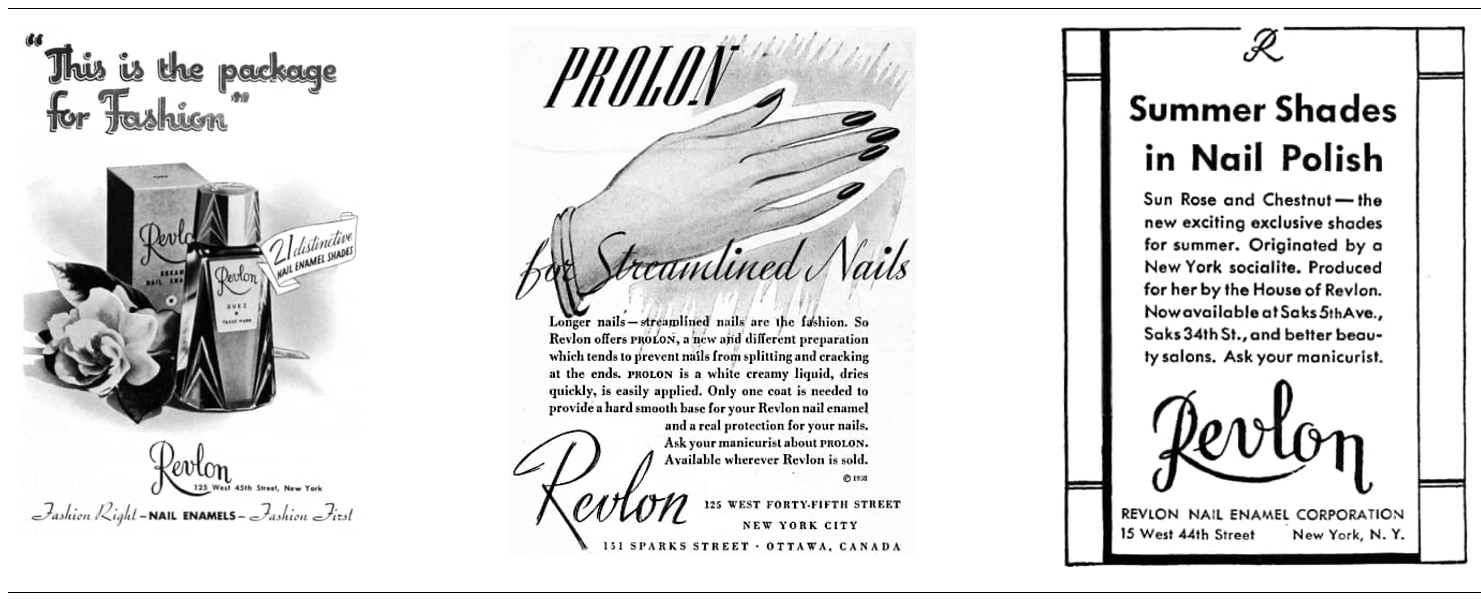
These days, nail polish has evolved to nearly every shade and colour you can imagine, and new technologies have allowed for crackle effects, glitters, speckers, iridescent and holographic. Gone are the days where high gloss car paint was our only option!
The invention of the acrylic
Like most epic inventions, such as DHA in sunless tanning and potato chips, the invention of the acrylic nail happened by accident! In 1954, a dentist named Frederick Slack broke a fingernail at work. Being a resourceful guy, he decided to create an artificial nail using bonding agents used in dentistry (polymers and monomers) and to his surprise, it worked! From there, he and his brother experimented further and developed a product and started a company called ‘Patti Nails’. As we already know, products continue to improve, and in the late 1970s, Dr Stuart Nordstrom developed the professional liquid and powder system for acrylic nails that will still use today!
Gel nail evolution
Gel nails first entered the market in the United States of America in the early 1980s, and this was the beginning of odourless nail enhancements. The first UV Gel system using a UV lamp was created by James Giuliano in 1982, and it cost approximately $500, which would equate to around $1700 today! However, the formulation for gel nail enhancements was not perfected until the late 1980s’. It wasn’t until the late 1990s when gel nails came back in full force with better formulations and tools that helped to achieve flawless nails.
You might be thinking, what is the difference between acrylic and gel nails. An obvious difference is the smell. Acrylic nail systems tend to have a strong odour, whereas gel formulations are odourless.
Acrylic Nails versus Gel Nails
Acrylic nails can be applied either on the natural nail bed or with extensions (nail tips). The main difference from gel nails is in the product itself that consists of the liquid monomer and the powder polymer. Acrylic sets naturally in minutes without the help of any equipment. In contrast, gel nails are painted on from a little pot of gloop and then cured under a UV light.
As explained, acrylic nails use a powder and liquid combination and cure on their own. In contrast, gel nails use a gel product and cure using a UV A rays from a light source. In addition to differences in application and curing, the removal process of some UV gel and acrylic nails are different. Acrylic nails have to be soaked in acetone and buffed off, whereas some of the older style UV gel nails instead need to be filed off completely. Gels have improved over time in product quality and curing speeds, these improvements have led the industry into developing soak-off LED gels. As the name suggests, these soak-off gels are removed the same way as acrylic, with acetone and then gently buffed off.
In the 2000s, the gel nail revolution began, and there were a range of 3-D gels, soak-off gels and gel nail polish available. By 2008 dozens of company began developing their range of LED gels. One of these one of these companies is Creative Nail Design (CND) who launched a gel range you may have heard of, called shellac. Put simply, shellac is a type of soft gel that is applied like a nail polish. It is a soak-off gel meaning it can be removed by soaking in acetone.
Shapes and styles through the decades
In addition to advancements in products and nail technologies, the shape of nails have changed over the decades. In the early 19th century, the common nail shape was short and natural with a rounded or almond tip. During the 1920s, oval shapes were in, and the ‘moon manicure’ became popular in the 1930s where the nail was kept long, and paint was applied to the centre of the nail, leaving a crescent at the tip base or both.

In the 1950s, the shape ‘squoval’ was popular, and this was a mix between an oval and a square shape. In the 1970s, the square shape became popular, and in the 1990s, a rounded nail was in. In the 2010s, the pointed nail shape became on-trend, and these days, there are a huge array of nail shapes that your clients may ask for. The image below outlines the most popular shapes still in fashion today:
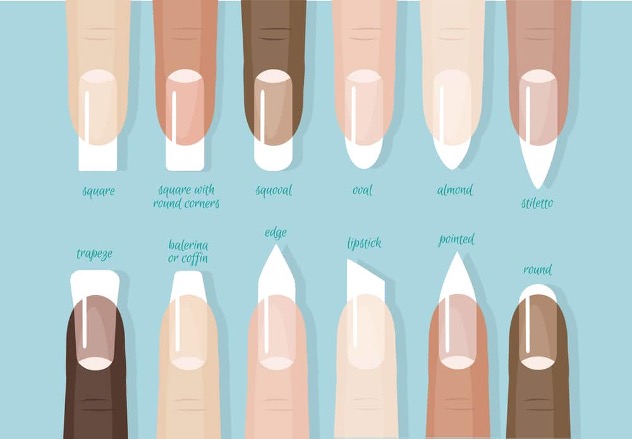
With advancements in nail sculpting techniques and electric nail files/drills, achieving the shapes above is now simpler than ever! Check out some famous celebs below to see the differences over the decades:


As a quick recap of the history of nails, review the timeline below:

If you would like to learn more about the history of nails throughout the ages, you may like to access the resources linked: